Installation & Ground Preparation
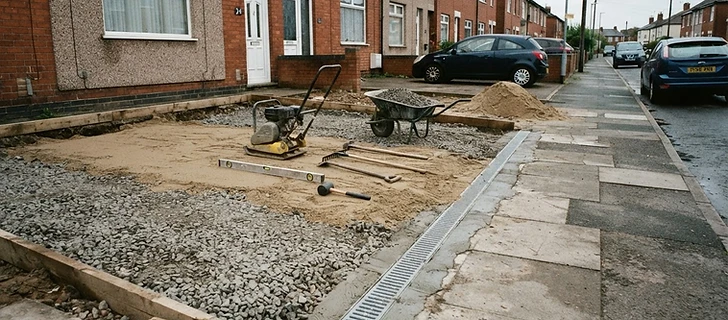
The visible part of the job takes a day. Most of the work that decides how long the drive lasts happens before any resin is mixed.
- 01Site visitMeasure up and look properly at the existing drive, the levels and the edges.
- 02PreparationRemove failed material where required and prepare a stable base to build from.
- 03Levels & drainageWork out falls, channels or a permeable build-up so water has somewhere to go.
- 04EdgingInstall suitable restraints and borders so the surface is held at its edges.
- 05LayingMix aggregate and resin in the right proportions and trowel the surface evenly.
- 06Curing & checksAllow the surface to cure, finish the edges and leave the site clean.
The finished resin is only as good as the base beneath it.

What happens to the existing driveway?
First we find out what it is and whether it is stable. Sound concrete or well-bound tarmac can often stay and be built on. Surfaces that are cracked through movement, breaking up at the edges or repeatedly patched usually need taking up, breaking out and carting away.
Can the existing base stay?
We look for movement, hollow areas, standing water, tree root damage and whether levels still work once a new surface is added on top. A drive that finishes higher than the damp course or the threshold is a problem, not a saving.
Where does rainwater go?
Falls are set so water runs away from the house. Depending on the frontage that may mean a linear channel at the threshold, a fall to a border or lawn, or a permeable construction that takes water down through the build-up. On short Gloucester frontages, where the drive meets the pavement directly, this needs working out before anything is laid.
Edging and restraint
A bound surface still needs holding at its edges. That may be existing sound kerbs or walls, or new block edging set on concrete. Without restraint, edges are the first thing to break down.
How long before you can use the driveway?
Foot traffic is usually fine later the same day or the next morning, and vehicles typically after around 24 to 48 hours, depending on temperature and conditions. Resin needs a dry surface to be laid, so poor weather can move dates.
Preparation is also where most of the price sits — see what affects the cost.
Want us to look at your existing drive?
Send a few details and we'll come back to you about the drive, the existing base and whether a site visit makes sense.